

Execution is the New Strategy: Why The Field School Threw Out Its Strategic Plan
For most school leaders, the phrase “strategic planning” conjures images of thick binders, endless committee meetings, and a document that is obsolete before the ink is dry.
In our recent LeadTeam Huddle, Ross Wehner and Jessica Catoggio (K12 Change Lab) and the leadership team from The Field School (Head of School Lori Strauss and Upper School Director Page Stites) challenged this traditional model. Their argument was simple: the market is moving too fast for the old way of planning to work.
The Reality of the "Three Ds"
Ross opened the session by outlining three massive pressures — the "Three Ds" — that are making the status quo a dangerous place for independent schools:
Demographics: Across the United States, we are seeing up to a 6% annual decline in both birth rates and public school enrollment, except for certain states in the Southeast and the West. Most schools are now fighting for a shrinking pool of students.
Disruptions: From global health crises to the sudden arrival of AI, "once-in-a-generation" shocks are now happening annually.
Dynamic Future: The era of the 10-year plan is over. Schools are now forced to "build in the dark," requiring a culture that values experimentation over fixed certainty.
In the face of these pressures, The Field School decided it could no longer afford to over-invest in ideas and underinvest in implementation. Here is how they shifted their culture to meet the moment.
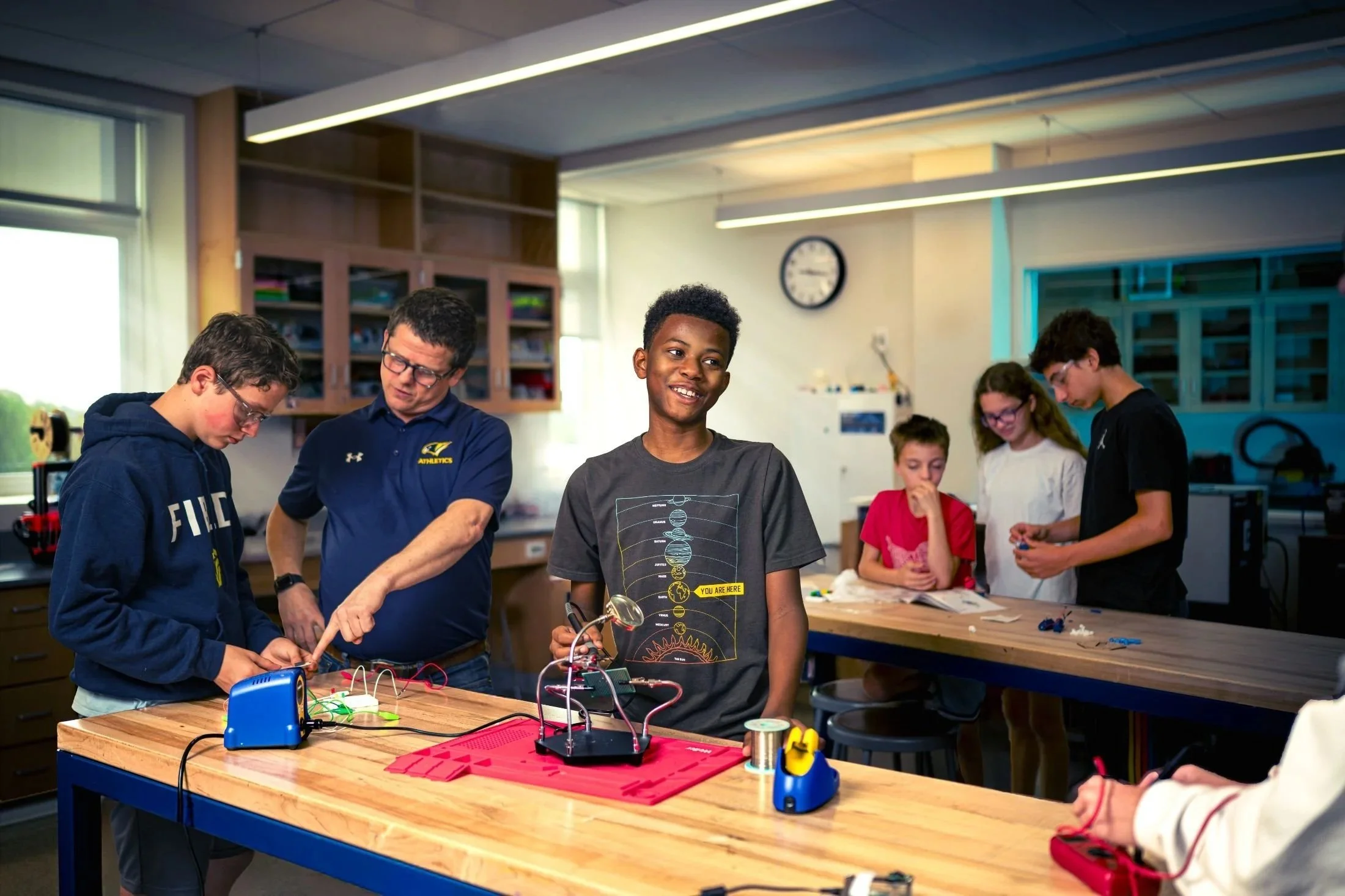
From The Field School Website (www.fieldschool.org)
1. The Two-Page Alternative
Five years ago, The Field School made a radical decision: they stopped doing strategic planning. Head of School Lori Strauss noticed that generating those documents required more energy than actually running the school.
Instead, they created a two-page Vision for Teaching and Learning.
The Rule: If a project doesn't map back to one of the two pages, they don't do it.
The Result: They aren't tethered to a five-year list of "to-dos." They have a North Star that allows them to change tactics on a dime — like rewriting their entire 6-12 summer reading list in one season to meet a political moment.
2. Fall in Love with the Challenge, Not the Solution
Ross Wehner noted that most school change efforts fail because teams rush to a solution before they’ve defined the problem. At K12 Change Lab, the first six months are focused on gaining “radical clarity” on mission, vision, academic philosophy, and ultimately, the challenge.
During this period, K12 Change Lab coaches ask the school teams to “fall in love with the challenge, not the solution.” Teams visit other schools, look at messy data, and interview faculty. By the time The Field School decided to move to standards-based grading, it wasn't because it was a "trend" — it was because they had spent months diagnosing exactly why their old assessment model was failing to drive student growth.
3. "The Bus" and the End of False Consensus
One of the most refreshing moments of The Huddle was Lori’s take on faculty buy-in. While "consensus building" is the standard academic approach, she pointed to Jim Collins’ Good to Great philosophy: You have to get the wrong people off the bus.
The Field School is explicit in the hiring process:
“If you want to close your door, teach your class, and go home, this is not the place for you. You will be annoyed here because we are relentlessly collaborative.”
By being that direct, they don’t have to "manage" resistance later. They’ve already screened for it.
4. Creating a Culture of Learning
Strategic change is inherently emotional because it threatens the "expert" status of long-tenured faculty. To lower the temperature, the School’s leadership team practices what they call Contagious Humility. This isn't just a soft skill, but rather a tactical move. Lori intentionally models this by acknowledging her team's expertise in front of the faculty. By saying, "Page is better at this than I am," she signals that the school isn't a hierarchy of perfect experts, but a laboratory of learners.
When leaders admit they don’t have all the answers, it grants the faculty the "permission to be a novice" again. This is the foundation of a culture of experimentation. As Lori put it: “I don’t care how many things go wrong, as long as we are constantly trying to get better.”
Interested in finding a partner to help your school manage change? Reach out to LeadTeam Partners for a conversation.
